
Personal Year 2
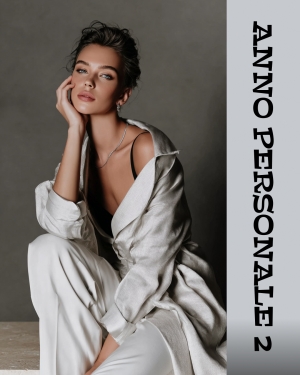
Prepare for a year that will bring significant changes into your life. Discover how to make the most of its energy.
The main energy of 2026: the strength of the Priestess
In 2026, the Second Energy will be active in your life—a pure feminine energy, gentle and receptive, known as the energy of the Priestess. It will shape events across all areas of your life.
How to build relationships
Women may trigger conflicts or confrontations. Your task is to avoid entering into them, maintaining softness, balance, and harmony.
Personal Year 1
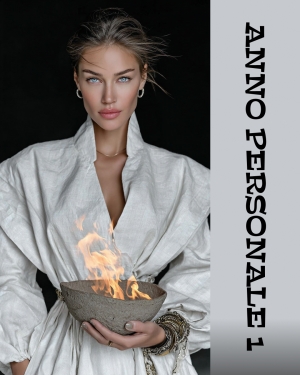
Leader Energy — Get ready for a year in which your inner strength becomes the main driver of change.
The first energy of 2026 brings powerful opportunities for self-realization and personal assertion.
What is the First Energy?
It is a unique wave of influence that will shape events across every area of your life. It calls for action and autonomy, opening the door to new beginnings.
In 2026, your primary task is to become the leader of your own life. Do not wait for support—act with courage.
Which energy will guide your experiences across the different areas of life in 2026?

Which energy will guide your experiences across the different areas of life in 2026? What core task and life lesson are you invited to consciously work through this year?
(January 1st – December 31st, 2026)
The Personal Year in numerology is a way to understand your current life phase.
It is not about destiny, but about process.
Each year we move through a different stage of personal development: moments that naturally invite expansion, others that call for slowing down, integration, and clarity. The Personal Year helps you give meaning to what you are experiencing, without judgment.
Numerology - A compass for personal growth
Dear readers, welcome to Ordo Vivens - a NEW division on my Blog, dedicated to systems that create value over time. Here We'll discuss about numerology and how numbers are connected with us, analyzing the destiny grid to understand deeper our personality, and much, much more.
Today we shall start with the Humanistic Numerology, which is a discipline of symbolic interpretation that views numbers as living energies, deeply connected to matter, character, and the evolutionary processes of human beings.
It does not aim to predict the future; rather, it offers tools for awareness that support personal, professional, and entrepreneurial orientation, helping individuals make decisions that are more aligned with their authentic nature.
Design Objects - The lounge chair DUE PIU by Nanda Vigo (1971)

Dear readers,
Today I wish to share another great design object, one of a kind - the lounge chair DUE PIU!
The Due Più lounge chair (1971) by Nanda Vigo exemplifies her fascination with light, transparency, and minimal form. Characterized by a sleek, geometric structure it appears to “float” in space, creating interplay between the sitter, the chair, and its surroundings. This illusion of weightlessness underscores Vigo’s broader exploration of “cronotopia” (the fusion of time and space). The design’s clean lines and use of advanced materials for the era make the Due Più both visually striking and emblematic of the avant-garde Italian design movements of the early 1970s.
Design Objects - The PROUST CHAIR (1978) by Alessandro Mendini

Dearest Design Enthusiasts, welcome back to my blog’s page!
In this new article you’re about to read here on my blog is about an iconic armchair, a re-incarnation of the bold baroque style, Alessandro Mendini’s “Proust” armchair (often referred to simply as the “Proust Chair”) - one of the most celebrated icons of Italian Postmodern design (1978).
Design Objects - The IN-SIDE collection (2024) designed by Thomas Heatherwick

Dear design lovers,
Welcome back to my blog page - a window dedicated to great design pieces for home, office, and public spaces! Ready for some new inspiration?
I’m excited to share one of the releases from 2024 in the world of design, a Masterpiece of innovation and sustainability, the IN-SIDE sittings, proposed as a 2-seat sofa, an armchair, and a bench. This collection is made in Italy by MAGIS www.magisdesign.com, which brings out the beauty and texture of the material to enjoy in outdoor living spaces.
The author, the Arch. Thomas Heatherwick is an Honorary Fellow of the Royal Institute of British Architects; a Senior Research Fellow at the Victoria & Albert Museum; and has been awarded Honorary Doctorates from several outstanding institutions, such as the Royal College of Art, University of Dundee, University of Brighton, Sheffield Hallam University and University of Manchester. Moreover, in 2013 Thomas was awarded a CBE for his services to the design industry.
Design Objects - Flatware (1936) cutlery designed by Gio Ponti

Dear readers and lovers of great design,
Today I wish to recall two great names from the industry of design: the first is Gio Ponti, and the second is Sambonet, both Made in Italy.
Gio Ponti (1891-1979) was an influential Italian architect and designer, who made significant contributions to the world of design, including flatware. His designs are known for their modernist approach, blending functionality with elegant, minimalist aesthetics.
One of his most famous flatware design is the FLATWARE cutlery, created for the Italian brand Krupp in 1936. It’s design was marked by modernist clean lines, while its smooth lines were practical and comfortable at use.
In the Sixties, the Sambonet family acquired Krupp brand, and continued the production of Flatware until Nineties, interrupting it for some time, and relaunching the production at the end of 2003 until our days, available in stainless steel, but also in silver-plated finish.
A Guidance to Interior Design Trends 2024 from Milano iSaloni International Fair

Dear Design Lovers,
Every year during the Milan iSaloni Internation Exhibition, we encounter the best producers worldwide and witness the most refreshing news from the industry of design, a platform where designers and brands showcase their latest creations! These news are interpreted as “Trends in interior design”, and are influenced by a variety of factors. Moreover, they evolve in response to cultural, economic, technological, and social changes.
The Thirties – A decade of fashion

Dear readers,
The 1930s was a decade marked by the Great Depression, and, at the same time, it brought significant advancements in style and design. Let’s take a closer look, see the key trends in fashion and interior design from that era:
- The 1930s fashion emphasized a more elongated, slim silhouette with natural waistlines, often cinched to highlight an hourglass figure.
- Introduced by designer Madeleine Vionnet, the bias cut dress became popular, allowing the fabric to drape and move fluidly, creating a sleek and body-skimming effect.
- Pioneered by designers like Elsa Schiaparelli, shoulder pads were used to create a strong and defined shoulder line.
- Women's daywear was made of tailored suits and dresses with modest hemlines, typically mid-calf length. Moreover, preference was given to practical fabrics like cotton, wool, and rayon, providing durability and comfort.
- Women’s evening wardrobe were mainly glamorous gowns, often made from luxurious fabrics like silk, satin, and velvet. They featured details like beading, sequins, and ruffles. Moreover, the backless evening dress became a sensation, offering a combination of sophistication and allure.
- The accent was made through accessories: Hats were an essential part of the 1930s wardrobe, ranging from cloche hats to wide-brimmed styles. Gloves were worn for both day and evening occasions. Art Deco influences continued with geometric shapes and bold designs in jewelry.