
Don’t Rest on Your Laurels
Success is a milestone — not a destination.
The phrase “to rest on one’s laurels” comes from ancient Greece and Rome, where victors and poets were crowned with laurel wreaths as a symbol of achievement and honor.
But laurels were meant to celebrate a victory — not replace future effort.
In business, resting on your laurels means relying on past success instead of building new value.
It’s when reputation replaces innovation.
When comfort replaces curiosity.
When yesterday’s win becomes today’s excuse.
Markets evolve.
Teams evolve.
You must evolve too.
The most effective leaders understand this:
achievement is earned daily.
Celebrate the win — then get back to work.
Give to the Caesar what is Caesar’s
“Render to Caesar what is Caesar’s” is an expression that has endured for centuries because it speaks to a universal principle: giving each party what is rightfully theirs, according to law — and, more importantly, according to justice.
In everyday language, it’s used when responsibilities must be clearly separated, when credit must be fairly assigned, when roles should not be confused. In business, public life, and personal conduct, it calls for clarity and fairness.
The origin of the phrase is biblical. It is attributed to Jesus Christ and appears in the Gospels, within an episode charged with political and moral tension.
When questioned by the Pharisees about paying taxes to Caesar — a mandatory tribute imposed on all peoples under Roman rule — Jesus recognizes the trap behind the question. Any direct answer could have placed him in opposition either to religious law or to imperial authority.
He asks for a coin and points to the image engraved on it.
“Whose image is this?” he asks.
“Caesar’s,” they reply.
And then comes the answer that transcends the moment:
“Render unto Caesar what is Caesar’s, and unto God what is God’s.”
The deeper meaning of the expression goes beyond taxation or religion.
It is a lesson in discernment — in knowing how to distinguish between civic duty and moral responsibility, between external authority and inner values.
Today, to use this phrase is to affirm a necessary balance:
to respect systems and rules without surrendering one’s integrity, and to acknowledge authority without confusing obedience with the absence of thought.
Think Big
“Think big” is an invitation to conscious ambition.
Not to do more, but to imagine more.
The expression is rooted in American entrepreneurial culture, where the value of an idea is often linked to its potential scale. Over time, it has been adopted globally, including in Italian business language.
In professional contexts, thinking big means resisting premature limitations — fear, habits, perceived constraints.
It’s about allowing space for vision before translating it into execution.
Thinking big doesn’t mean ignoring reality.
It means refusing to let reality be the limit of imagination.
To lead the change
“To lead the change” reflects the understanding that change is no longer an exception, but a constant condition.
The expression comes from the field of change management, where transformation is seen as something to be guided, not resisted.
In business, it’s used in contexts of innovation, restructuring, digital transformation, and strategic evolution.
Leading change means taking responsibility for direction, not just reacting to events.
It doesn’t mean forcing outcomes.
It means creating meaning within movement and offering orientation when certainty is no longer possible.
To have a vision
“To have a vision” is one of the most powerful — and most overused — expressions in modern business language.
It refers to the ability to imagine a future that doesn’t yet exist, and to act in alignment with it.
The concept comes from 20th-century leadership and management theory, where vision is not a plan, but a direction. Not a list of steps, but a sense of purpose.
In professional contexts, having a vision means connecting long-term meaning with daily decisions.
It’s what allows leaders to build value over time, not just manage the present.
A vision is not prediction.
It’s deep coherence — knowing where you’re going well enough to know what doesn’t belong.
The Jewel That Remembers Who You Are
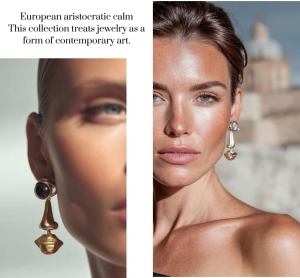
Dear Gentle Readers,
Not all jewelry is made to decorate.
Some pieces are made to declare presence.
A statement jewel does not ask for permission. It does not follow trends, nor does it expire with a season. It is sculptural because it occupies mental space before physical space. It is bold because it treats the body as architecture, not as a surface.
An earring like this does not “complete” a look: it defines it. Choose statement pieces that embodies art.
A stop at Antico Monastero - Langhe cuisine
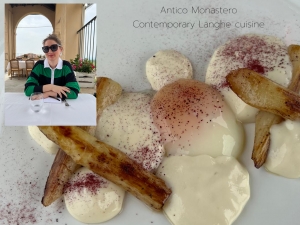
Gear Gourmet fiends,
Today, I wish to share one of my favorite places in Italy - Le Langhe, Monferrat!
In the heart of it there is a very pictoresque place named Lu Monferrato with a restaurant one of a kind - ANTICO MONASTERO, and in this post I will share one of the gourmet plates you may find here.
GESSI - Wellness as a living standard
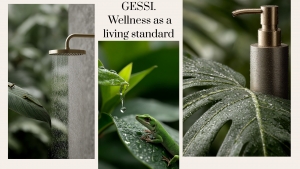
Dear Design Lovers,
In contemporary luxury real estate, true value lies beyond square meters and finishes.
It resides in experience, emotion, and long-term well-being.
GESSI bathroom collections are conceived to elevate residential spaces into private wellness sanctuaries, where advanced technologies, cutting-edge materials, and refined Italian craftsmanship converge.
Each element is designed to integrate seamlessly into modern architectural projects, enhancing the perception of quality, comfort, and exclusivity.
How to Wear MIDI and MAXI Skirts Today (Without Overdoing It)
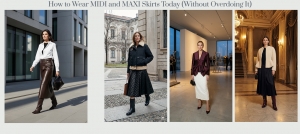
Dear Readers,
Midi and maxi skirts are among the most powerful pieces in a modern wardrobe. Elegant yet versatile, feminine but never fragile, today they speak less about trends and more about styling awareness.
The key is not what you wear, but how you balance proportions, volumes, and intention.
Here’s how to style midi and maxi skirts in a contemporary, confident way—straight from a stylist’s perspective.
THE LAW OF LEGACY

Dear Gentle Friend,
True wealth is when money continues to work even after you stop.
Wealth is not about cars or status. It is about creating something that outlives you.
Legacy is:
- a family protected from financial crises
- children educated in financial wisdom
- assets generating income for generations
- a life built on meaning, not survival
Legacy is the highest level of mastery in wealth management.