
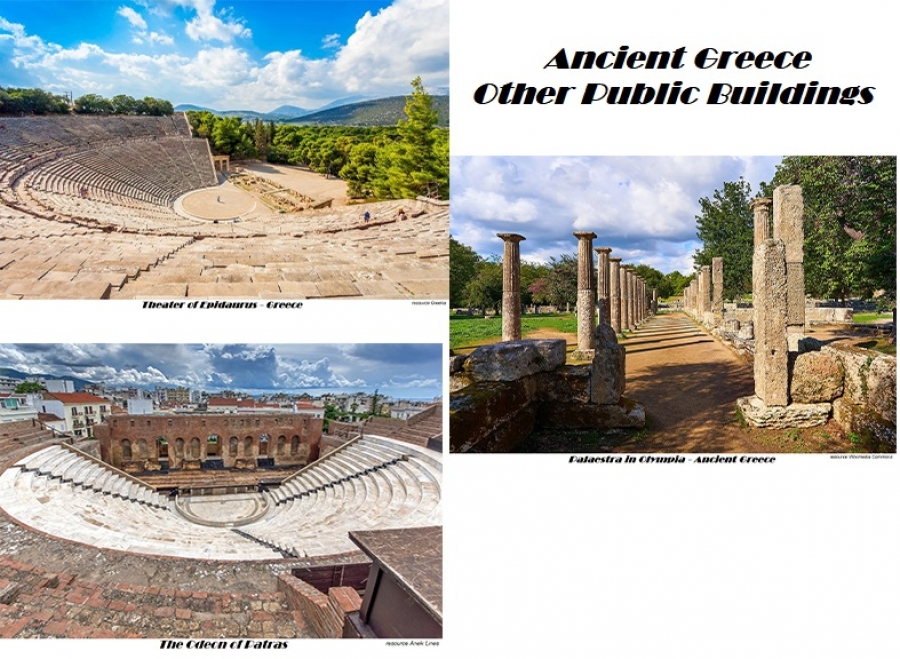
Every Greek town had an open-air theatre. These were used for both public meetings as well as dramatic performances. The importance of such constructions was due to the development of Greek drama, nurturing from rural festivities related to the festival deity Dionisio. The theatre was usually set in a hillside outside the town, had rows of tiered seating set in a semicircle around the central performance area, the orchestra. In biggest theaters, the auditorium was divided vertically into two parts, the lower hollow or theatre and the upper theatre or epitheatre. Behind the orchestra was a low building called “skênê”, which served as a storeroom, a dressing-room, and as a backdrop to the action taking place in the orchestra. Here they also built covered walkways called “stoas” where merchants would sell goods and people held public meetings. Theaters were designed with acoustics that allowed even the back rows to hear the actors. To maintain visual interaction with the public at every distance, actors would wear grotesque masks expressing state of mind: anger, joy, sadness, sorrow, and more.
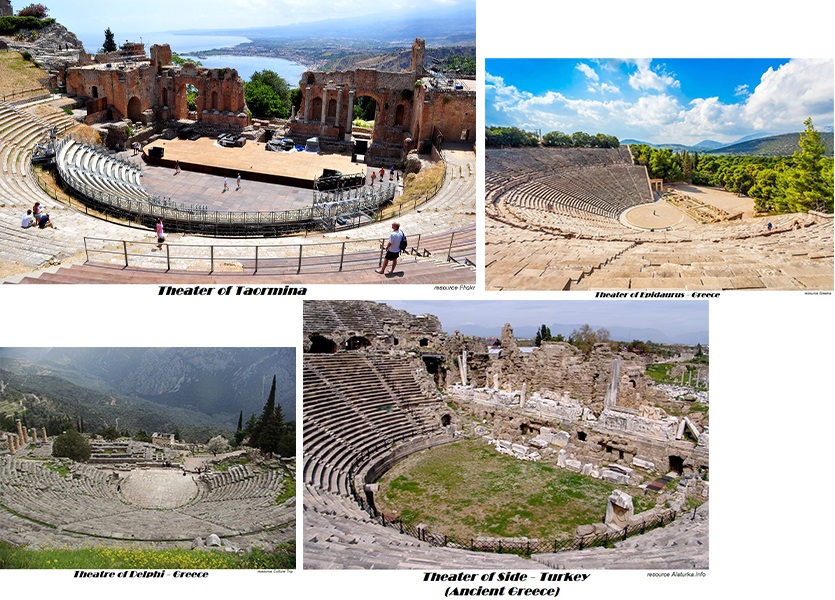
The positioning of a theater was chosen in connection with the landscape view and surroundings, a strategy to overcome the absence of decorative elements. Thus, the ancient Theater of Delphi in Greece was built on a hill giving spectators a view over the entire sanctuary and surrounding landscape and could seat 5,000 spectators.
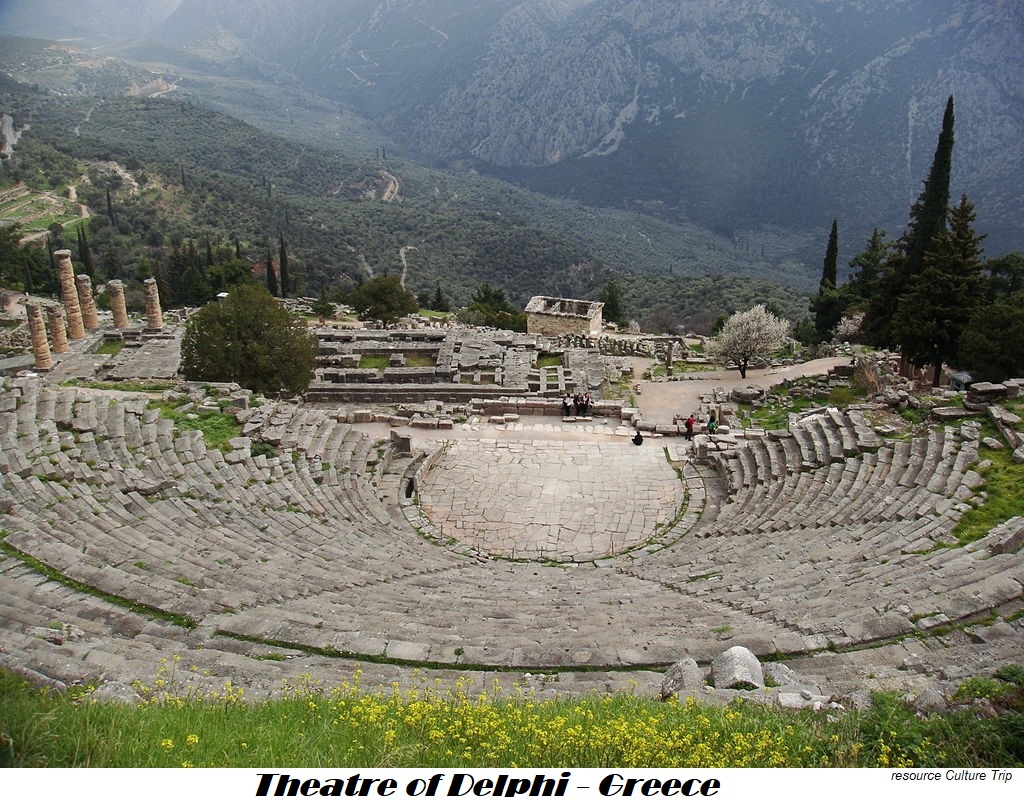
The ancient Theatre of Epidaurus in Greece, built by the architect Polykleitos the Younger on the west side of Cynortion Mountain, is considered to be the most perfect ancient Greek theatre with regard to acoustics and aesthetics. It was used as a therapeutic and religious center dedicated to Asklepios, the god of healing. At its maximum capacity could held from 13,000 to 14,000 spectators. The theatre mesmerizes with positioning on a ridge of forested hills and lush greenery, an integral part of the theatre itself.
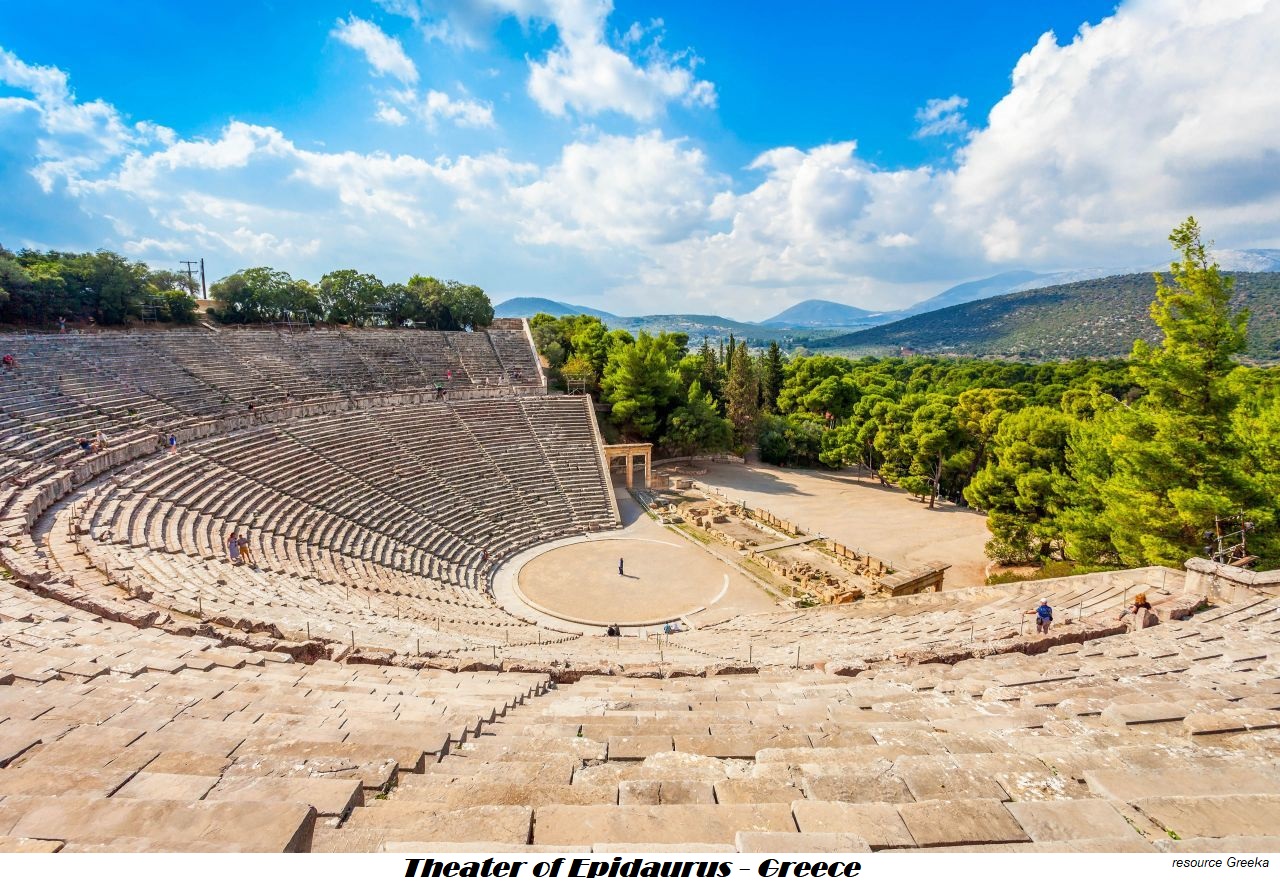
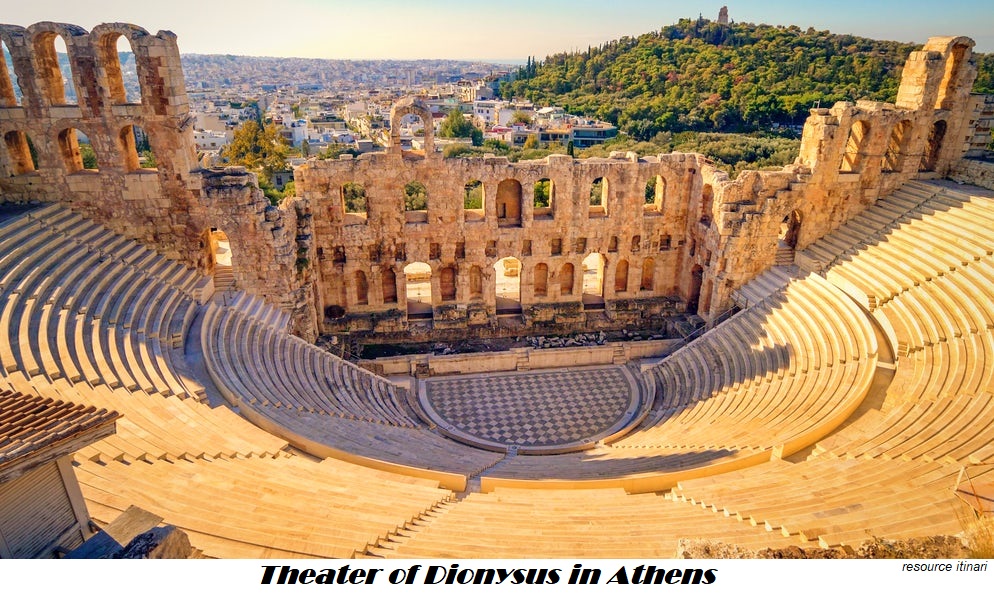
The Theatre of Dionysus in Athens, positioned on the south slope of the Akropolis hill, dazzles a beautiful view on the antique city. In the fourth century BC the theatre reached its fullest capacity containing up to 17,000 spectators.
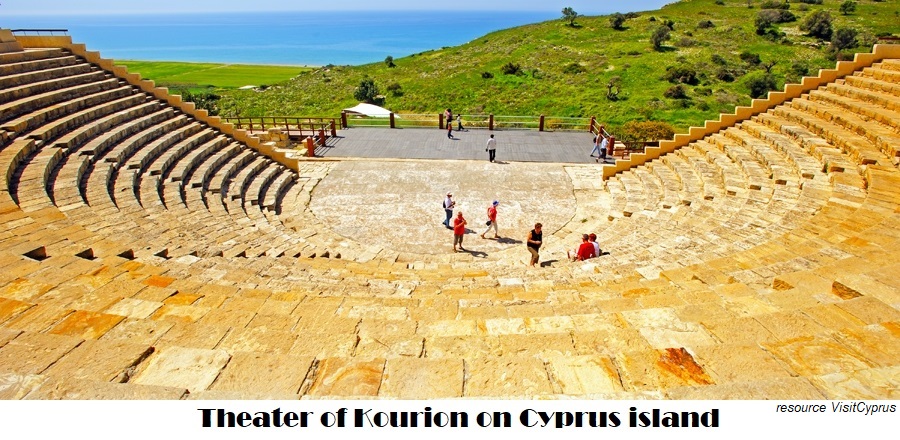
The Theater of Kourion on the island of Cyprus is located on the southern end of an abrupt hill of the Mediterranean Sea, where the sound of the surf was certainly emphasizing the theatrical performance. On either side of the stage were two corridors from where the audience accessed the theatre, with seat capacity up to 3,500 spectators.
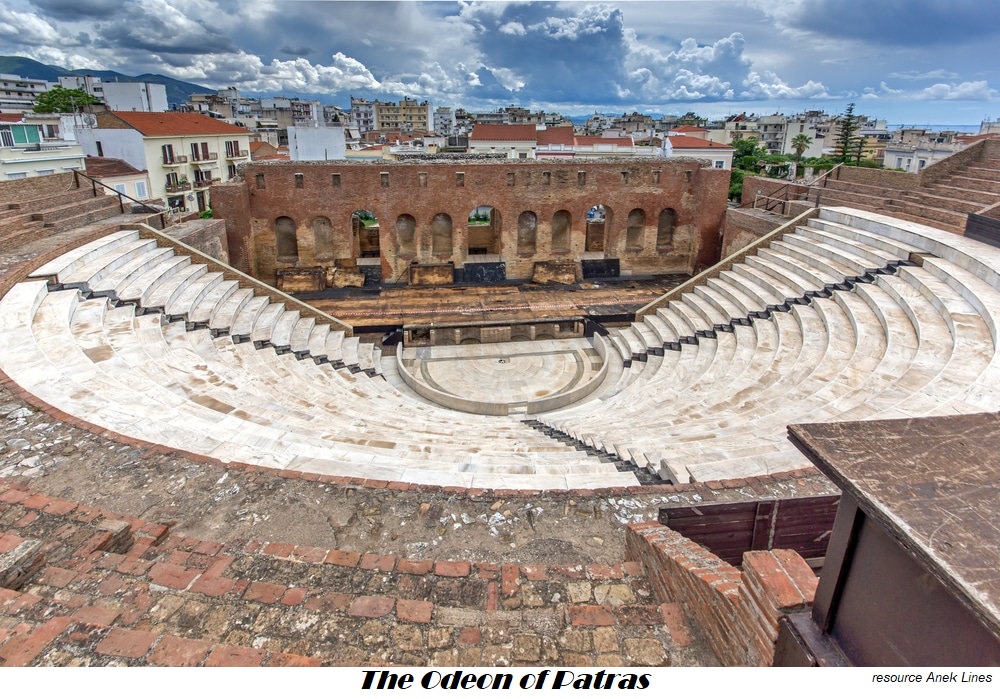
Besides big open-air theaters, in the Ancient Greece were building smaller circular constructions named odeon. This type of construction was similar to that of an ancient Greek theatre, but it was only a quarter of the size and was provided with a roof made of light wood or a tent, for acoustic purposes. These locations were designated to music: singing exercises, musical shows, poetry competitions, etc.
The oldest odeon known in Greece was the Skias at Sparta, so-called from its resemblance to the top of an umbrella, said to have been erected by Theodorus of Samos (600 BC). However, the most magnificent odeon was the Odeon of Herodes Atticus on the southwest cliff of the Acropolis at Athens. It was built in about 160 AD by the wealthy sophist and rhetorician Herodes Atticus in memory of his wife. It had accommodation for 4,500–5,500 persons, and the ceiling was constructed of beautifully carved beams of cedarwood, probably with an open space in the center to admit the light. Similar buildings also existed in other parts of Greece: at Corinth, at Patrae, at Smyrna, and other towns in Asia Minor.
Bouleuterion was another public building, very much alike to theaters, which served as a meeting place for the citizen council of the city, also translated as council house, assembly house, and senate house. A selection of representatives met here to handle public affairs and represent the citizenry of the polis. The bouleuterion generally was a covered, rectilinear building with stepped seating surrounding a central altar.
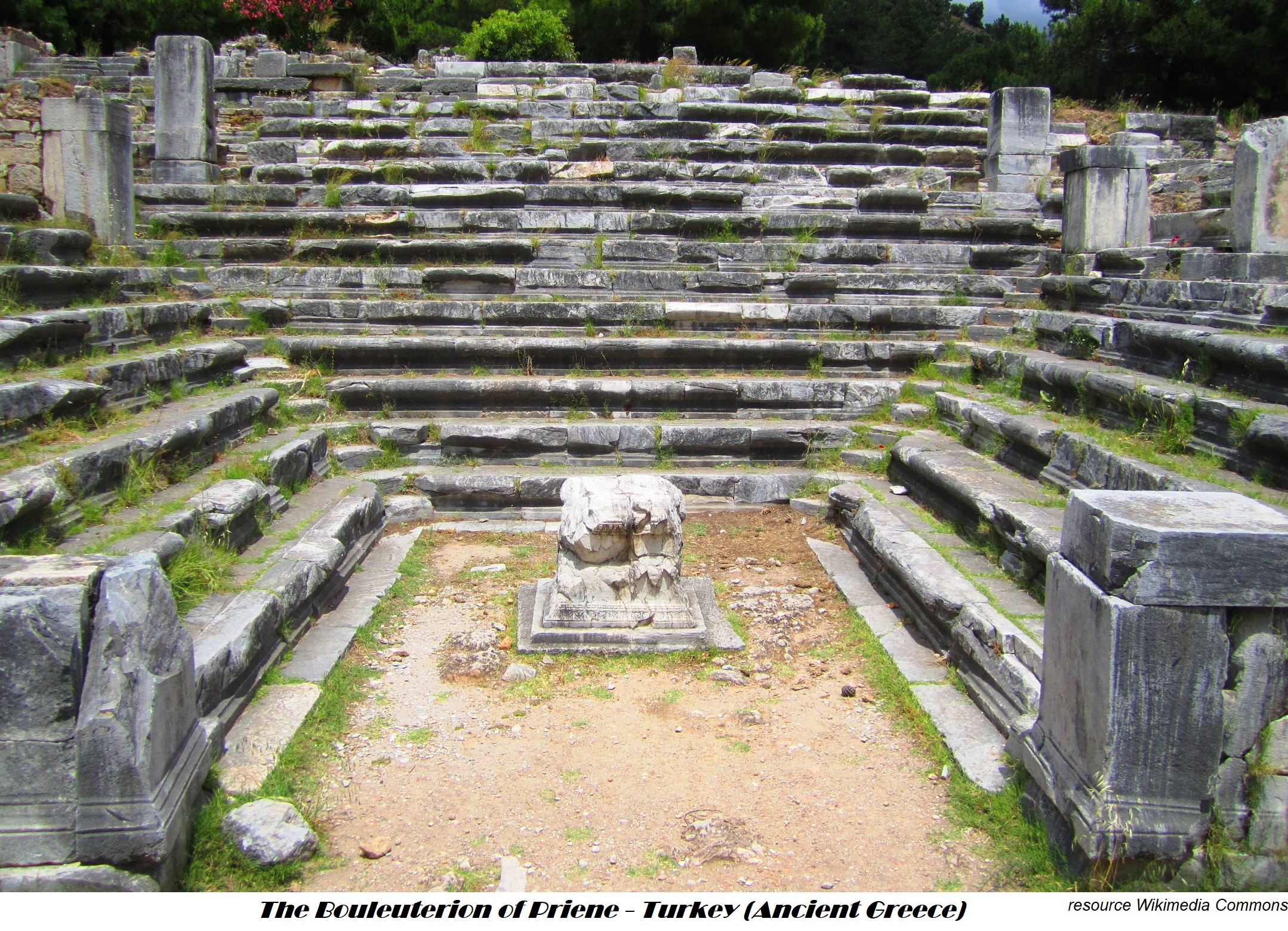
The Athenian Boule is better known as the Council of 500 (because was comprised of 500 members). Solon was credited with its formation in 594 BC as an assembly of 100 men each from Athens's four original tribes. At the adoption of the new constitution around 507 BC, this was changed to 50 men each from the 10 newly created tribes. Each served a one-year term.
Stadium, Gymnasium, and Palaestra were other types of construction, all dedicated to sports and training, but with different purposes.
The Greek stadium (derived from stadion, a Greek measurement equivalent to c. 578 feet or 176 meters) was the location of foot races held as part of sacred games. Best models exist at Olympia, Delphi, Epidarus and Ephesus, while the Panathinaiko Stadium in Athens, which seats 45,000 people, was restored in the 19th century, and was used in the 1896, 1906 and 2004 Olympic Games.
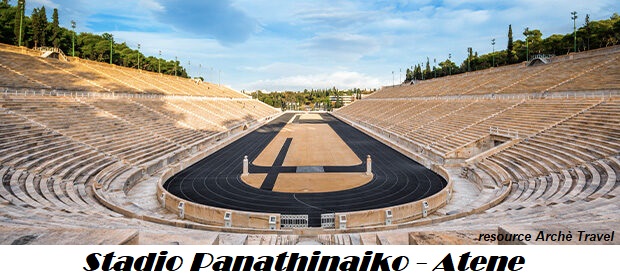
The gymnasium (from the Greek term gymnós meaning “naked”) was a training center for athletes who participated in public games. Only adult male citizens could use the gymnasia. Athletes competed nude, a practice which was said to encourage aesthetic appreciation of the male body, and to be a tribute to the gods. These were under the protection and patronage of Heracles, Hermes and, in Athens, Theseus.
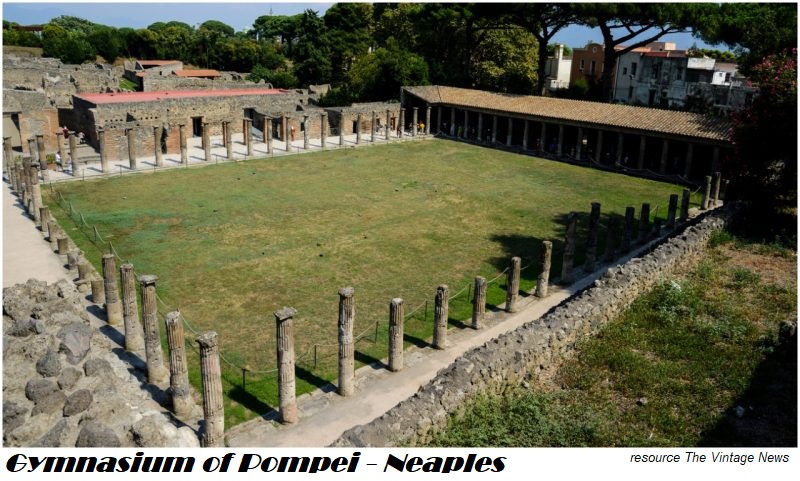
The palaestra was a building, where wrestling was taught and practiced. It consisted of a large square or rectangular courtyard under open sky, surrounded by colonnades. Off these colonnades were dressing rooms, lecture rooms, bathrooms, and rooms for storing equipment. Wrestlers practiced in all weathers. These were often positioned near gymnasiums, other times a part of gymnasium complexes. Most cities in the Greek world had a palaestra, while large cities may have had several; some were privately owned.

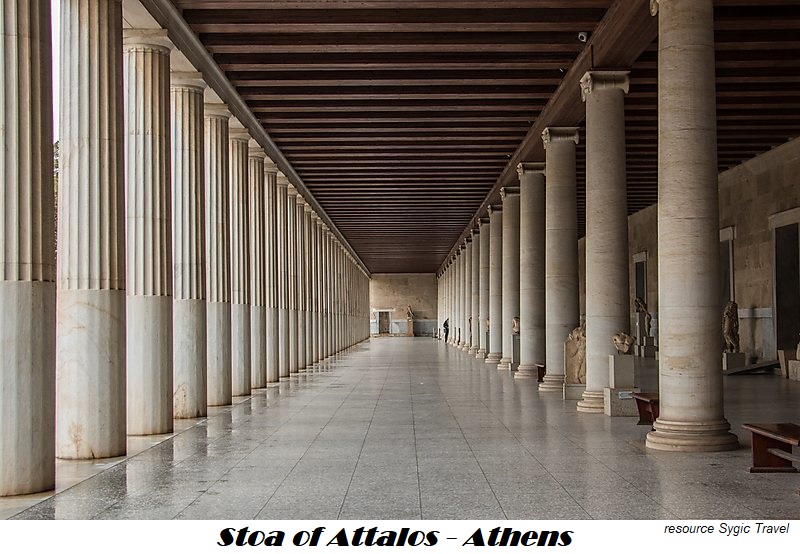
Stoa is another Greek architectural construction that describes a covered walkway or colonnade (portico) that was usually designed for public use. Early stoas were open at the entrance with columns, usually of the Doric order, lining the side of the building; they created a cozy and protective atmosphere. Later examples were built as two stories, and incorporated inner colonnades usually in the Ionic style, where shops were located; here merchants could sell their goods, artists could display their artwork, and religious gatherings could take place.
Fountain houses were built all over the city to supply clean drinking water, and where citizens could fill their jars and containers. Gathering water was seen as a woman’s task and, as such, it offered the women a chance to socialize with others while collecting water.
Best wishes,
Nadiya
MetropolitanMe Blogger